
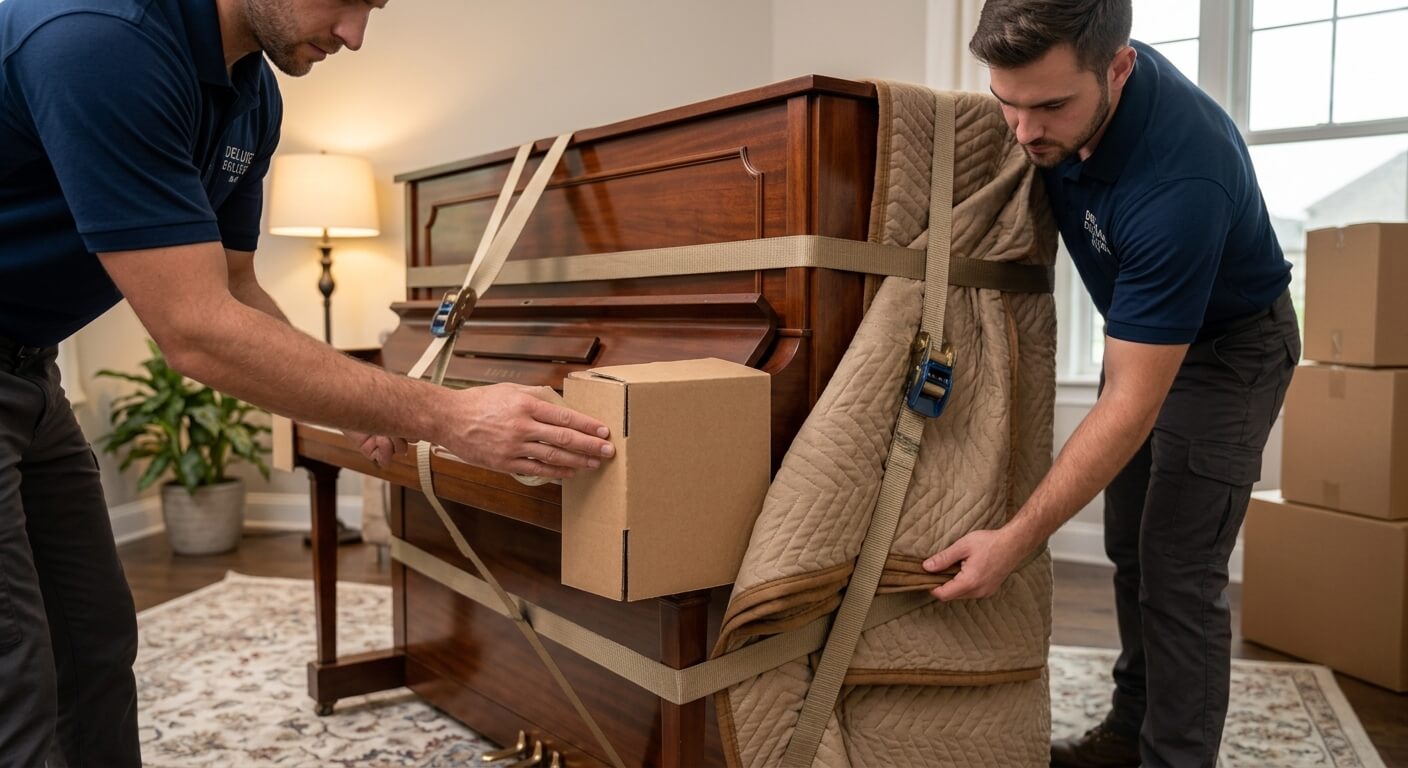
Moving a piano isn’t just about lifting something heavy — it’s a process with a specific sequence designed to protect the instrument’s finish, structure, and internal components from start to finish. If you’re curious what actually happens when a professional piano mover handles the job, here’s a look at the process.
Assessing the Piano and the Path
Before anything is moved, an experienced crew evaluates the piano itself (upright, baby grand, or grand) along with the path it needs to travel — doorways, hallways, staircases, and any tight turns. This planning step helps the crew choose the right equipment and approach before any lifting begins.
Securing the Keyboard and Moving Parts
Pianos have moving components — the keyboard lid, pedals, and on some models, casters — that need to be secured before transport. Locking or securing these parts helps prevent them from shifting or sustaining damage during the move.
Wrapping and Padding
The piano’s exterior is wrapped in thick moving blankets or padding to protect its finish from scratches, dents, and pressure marks. Corners and edges — often the most vulnerable points — get extra attention during this step.
Loading Onto a Piano Board or Skid Board
Once padded, the piano is carefully tilted and secured onto a piano board or skid board — a flat, sturdy platform designed specifically for transporting pianos. Straps hold the instrument firmly in place on the board, keeping it stable as it’s moved.
Maneuvering With Dollies and Ramps
With the piano secured to the board, movers use heavy-duty dollies to roll it through the home and ramps to navigate stairs or the entrance to the moving truck. This is where experience matters most — controlling that much weight on a ramp or through a doorway safely takes practice and the right technique.
Keeping the Piano Upright
Pianos are generally kept in an upright position throughout the move whenever possible, since tilting or laying certain models on their side for extended periods can affect internal components like the strings and soundboard. Movers plan their approach with this in mind.
Securing the Piano in the Truck
Once loaded into the truck, the piano is strapped securely to the truck’s walls or an anchor point to prevent it from shifting during transport. This final step matters just as much as the loading process — a piano that isn’t properly secured can be damaged even after the hard part of moving it is done.
The Goal: Arrive in the Same Condition It Left
Every step of this process exists for one reason: to make sure your piano arrives at its new home in the same condition it left in, without damage to its finish, structure, or sound. It’s a level of care that’s difficult to replicate without the right training and equipment.
Let Parker Movers LLC Handle Your Piano
Parker Movers LLC provides piano moving services as part of our residential and commercial moving offerings throughout the Parker and Denver Metro area. Request a moving quote and let us know your piano type and moving situation so we can plan accordingly.